


Instagram teen safety is in the news again, but this week’s question is not whether Meta can describe safety features. It is what changed, what is being challenged in court, and what you can verify tonight in your teen’s actual account.
Key Takeaways
- Instagram teen safety is about more than marketing. This week’s real story is Meta’s platform changes and the trial challenging whether they are enough.
- The four-state California trial is part of a broader 29-state case, and the states’ claims are allegations that Meta denies.
- Meta points to Teen Accounts, supervision, age-assurance systems, content controls, and AI-related parent alerts as signs of progress.
- A feature can be announced, available, enabled, and still not work well enough in real life.
- Your best move tonight is a calm, collaborative account check with your teen, not secret surveillance.
- Black teens face unique risks from racialized harassment and algorithmic bias, but they also deserve privacy, creativity, and joy online.
Our editorial position comes first: Successful Black Parenting is on Meta’s mailing list as a Meta Parent Partner to receive information about policies and tools intended to help keep children safe. That relationship does not mean we endorse every Meta feature, campaign, or claim. Our first responsibility is to children and families. We will examine what Meta says, what independent reporting finds, and what Black parents can actually verify in their children’s accounts—and we will say plainly when a safety feature has limits.
Get the Monday email + free printables for your child’s age
The week's best articles for parents raising Black children, plus free printables and book picks. One email, every Monday. Sign up and we will send you our two routine charts plus a free printable made for your child’s age, from a hospital bag checklist to a teen phone agreement.
Successful Black Parenting Magazine keeps the same editorial standard in every platform story: children’s safety comes first, followed by Black families’ dignity, privacy, cultural connection, and joy.
A big reason this matters now is that a California federal trial that began August 18, 2026 could shape how Instagram and Facebook work for young users in the future. According to Reuters and AP reporting from the trial opening, California, Colorado, Kentucky, and New Jersey are trying the first part of a broader 29-state case. The states allege that Meta designed Facebook and Instagram in ways that kept children and teens engaged in harmful or addictive ways, misled the public about youth safety, and collected or used data from children under 13 without required parental consent. Those are allegations in ongoing litigation, not established facts.
The influencer campaign is still relevant background. Reporting from the Tech Transparency Project says Meta paid or sponsored parenting and lifestyle influencers to promote safety features, and a related TTP report says that effort helped counter criticism and child-safety legislation. Meta has disputed the broader criticism and says paid partnerships are disclosed. But that campaign is not the main story this week. The main story is what Meta says has changed, what the states say still is not enough, and what you can confirm with your own eyes tonight.
Instagram Teen Safety: What Meta Changed
Maybe you have heard the updates and wondered, “What is actually new for my child?”
Meta says Teen Accounts are designed to put many teen users into more protective defaults. On its official Teen Accounts page, Meta says teens ages 13 to 17 generally get built-in settings around privacy, messaging limits, sensitive content, sleep mode, and contact controls. That is Meta describing its own system, which matters, but you still need to verify what is active on your child’s account.
Meta also says its June 2026 update expanded a default 13+ content setting and a stricter Limited Content option across Instagram, Facebook, and Messenger. In plain language, that means Meta says teen accounts should see less mature or age-inappropriate material by default, with a tighter setting available in some cases. That sounds reassuring, but company announcements are not the same thing as independent proof that every harmful recommendation is gone.
On age checks, Meta says its May 2026 age-assurance update uses AI-powered signals to identify when someone may be misrepresenting age so the company can place them into a more age-appropriate experience. That can matter if a younger child tries to appear older, or if an account’s date of birth is wrong. But age assurance is still a company system with real limits, including the possibility of missed accounts or incorrect classification.
Supervision matters too, especially if you want steadiness without turning your home into a surveillance zone. Meta says its supervision tools and Family Center can let you and your teen agree to time limits, see some privacy settings, review followers and following lists, and in some cases view broad insight into the topics shaping recommendations. That visibility can help you coach better questions, but it is not full access to every message, search, or thought.
Meta has also promoted parent alerts connected to teen distress conversations with Meta AI. In its July 2026 announcement, the company said supervising parents in some markets could receive alerts if a teen’s conversation with Meta AI suggested possible distress, including self-harm concerns. Again, that is Meta’s own description of its rollout. It may not be available in every place, on every account, or in the same way for every family yet.
And Meta points to broader child protection policies in its Safety Center as proof that it has a stronger youth-safety framework. That matters. But what matters even more for you tonight is the difference between:
- A feature being announced.
- A feature being available on your teen’s account.
- A feature being turned on.
- A feature working well in real life.
That last part is where many families get tripped up.
What Meta Is Being Sued Over This Week
This is the part that cuts through the public-relations talk.
According to Reuters’ August 18 trial report and AP’s opening-day coverage, the four-state trial now underway is part of a broader 29-state case against Meta. The states allege that Meta designed features on Facebook and Instagram to keep children and teens engaged in harmful or addictive ways. Reporting says those allegations include design choices tied to engagement-driven recommendations, notifications, and the kind of endless content flow many people think of as infinite scroll.
The states also allege that Meta misled the public about youth safety and collected or used data from children under 13 without the parental consent required by federal law. The states are seeking damages and court-ordered changes that could affect platform design. As Reuters reported, possible remedies being discussed in the case could include stronger age restrictions or age assurance, changes to recommendation systems, limits on infinite scroll, notification changes, and other safeguards. But it is important to say this clearly: none of those remedies has been ordered nationwide in this trial at this time.
On August 19, AP reported that former Meta engineering director Arturo Béjar testified that Meta had a “don’t ask, don’t tell” approach to under-13 users. AP attributed that characterization to Béjar’s testimony. AP also reported that Béjar criticized opt-in tools such as Take a Break, saying tools that depend on a teen choosing to activate them may not be effective enough in real-world use. Those statements came through sworn testimony and reporting about the testimony; they are not findings from the court.
On August 20, AP reported that Meta defended its youth-safety record and pointed to Teen Accounts, supervision, age-assurance efforts, restrictions on teen messaging, and other safety tools. Critics in that same reporting argued those protections still fall short. That is the right way to understand the moment: strong claims on both sides, an active case, and no final ruling in this trial yet.
Meta denies the allegations. In trial coverage from Reuters and AP, the company argues that its safety record and tools matter and that it has built protections for younger users. That response deserves to be heard. It also deserves to be tested.
Why A Safety Feature Can Exist And Still Be Questioned
Have you ever turned on a feature and still felt like something was off? That feeling matters.
A platform can announce a new protection and still leave families with gaps. A feature may exist on paper but not be active on your teen’s account. It may be active but easy to work around. It may be opt-in instead of default. It may depend on the platform correctly identifying a user’s age. It may reduce one kind of risk while doing very little about another.
That is one reason Béjar’s criticism, as reported by AP, matters beyond one witness. If a tool like Take a Break depends on a teen choosing to use it in the middle of compulsive or stressful behavior, then the design question is bigger than whether the button exists.
Age misclassification matters too. Meta says its age-assurance systems are improving, but any automated approach can have enforcement gaps. A younger child may get through. An older teen may be wrongly flagged. A teen may create more than one account. A parent may assume a “Teen Account” label means the work is done when the real job is just beginning.
This lawsuit matters beyond money because the states are not only asking for damages. They are also seeking changes that could affect how the platform is built and how responsibility is assigned when youth-safety promises do not match lived experience. For you, that means the story is not just “Does Instagram have features?” It is “Do those features consistently protect real children in real homes?”
Your Instagram Teen Safety Check Tonight
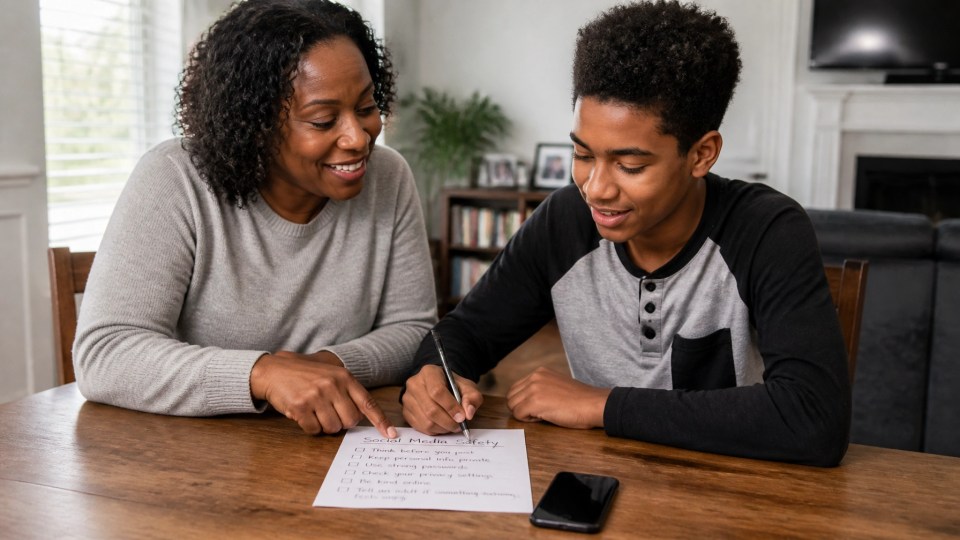
If you are busy, start here. Sit beside your teen and check together. Let your child hold the phone when possible, because cooperation teaches judgment better than fear does.

- Confirm Teen Account status. Open the account settings and verify whether the account is actually being treated as a teen account with the expected protections.
- Check privacy settings. Make sure the account is private if that fits your teen’s goals and age. Review who can follow, comment, tag, and mention them.
- Review 13+ And Limited Content settings. See which content level is active and explain to your teen what that setting does and does not do.
- Check followers and message requests. Look for adults your teen does not know, duplicate accounts, new profiles, or people pushing chats off-platform.
- Open group chats together. You do not need to read every private message to be safety-minded. Instead, check whether unknown people are in group chats and whether your teen knows how to leave, block, and report.
- Turn on Hidden Words and tighten tags, mentions, and remixing. These steps can reduce harassment and protect your teen’s image from being reused without care.
- Look for location clues. Scan bios, Story highlights, captions, uniforms, school names, schedules, and repeated landmarks. Reducing location clues supports physical safety without shrinking your child’s joy.
- Review recommendation patterns. Ask what the app keeps showing your teen. Watch for racialized harassment, harmful beauty standards, sexualized content, violent clips, or recommendation loops that leave your teen feeling small.
- Check blocked and reported accounts. Praise your teen for using safety tools. Save screenshots when needed so there is evidence if harassment escalates.
- Review time limits and sleep tools. These can support rest and routine, but they are helpers, not replacements for conversation and boundaries.
- Ask about Meta AI use. If your teen uses Meta AI, talk about what kind of questions they ask, what answers feel weird, and whether any parent alert features are active under supervision in your account setup.
- Practice the exit plan. Make sure your teen knows how to block, restrict, report, mute, unfollow, and save evidence quickly if something turns unsafe.
Do not confuse surveillance with safety. You do not need to read every private message or monitor every emotion to protect your child well. The goal is to build digital steadiness, not panic.
Why This Matters For Black Teens
When your child is Black, online safety is never only about screen time.
A JAMA Network Open study found that 141 Black adolescents reported about six race-related online experiences per day on average, and negative experiences such as online racial discrimination, algorithmic bias, and exposure to race-related traumatic events were linked with more anxiety and depressive symptoms the next day. That is not a small detail. It means the digital environment can shape your teen’s emotional well-being quickly.
A Frontiers in Psychology study involving 1,041 African American parent-adolescent pairs found that more frequent direct online discrimination was associated with more negative stereotypes about Black people’s computing abilities. The research also pointed to the protective value of supportive parental technology attitudes and strong racial identity.
So when you check Instagram, you are not just asking, “Is a stranger in the DMs?” You are also asking:
- What does the algorithm keep teaching my teen about Blackness?
- Whose beauty is centered?
- Whose pain is normalized?
- Whose joy is being hidden, mocked, or copied?
Black teens deserve creativity, privacy, humor, style, and connection online. They deserve to build community, share art, follow sports, make reels, and talk with friends without being over-policed in their own homes. Safety should not require you to treat your teen like a suspect. It should help you protect their dignity while teaching them strong digital instincts.
That is why Successful Black Parenting Magazine keeps saying what some platform messaging skips: real safety includes emotional security, cultural respect, and the freedom for Black children to thrive online without constant harm.
What Parents Should Watch Next
This story is moving fast, and that alone is a reason to stay steady.
The current trial is ongoing. Other lawsuits, possible legislation, new product updates, and enforcement changes could all affect what Instagram and Facebook look like next for young users. The states want damages and possible court-ordered platform changes. Meta says its current tools show meaningful progress. Both things can be true at once: platforms may add real features, and families may still need stronger accountability.
So what should you watch next?
- Watch the trial reporting, not just brand messaging.
- Watch official settings pages, because tools can change by account, age, and country.
- Watch whether announced protections are actually visible and active in your teen’s account.
- Watch for gaps between Meta’s claims and independent reporting.
- Watch how your teen feels after using the app, not only how long they use it.
Influencer posts may still shape public opinion, but they should never replace checking the account itself, reading reliable reporting, and trusting what your child’s lived experience tells you.
Instagram teen safety works best as one part of a bigger family plan. Our guide to online safety for Black children walks through privacy settings and digital footprints, and what Meta’s settlement means for your teen covers the earlier case. If you are weighing monitoring tools, read how to track your child’s phone without losing their trust. The American Academy of Pediatrics also keeps a Center of Excellence on Social Media and Youth Mental Health with free tools for families.
Is Instagram Safer For Teens Now?
Meta has added more teen-focused protections, including Teen Accounts, tighter content settings, supervision tools, and age-assurance systems. Those updates may improve safety for some users, but independent reporting and current litigation show serious questions remain about how well those protections work in real life.
What Is Meta Being Sued Over In The August 2026 Trial?
According to Reuters and AP, the states allege Meta designed Facebook and Instagram to keep children and teens engaged in harmful or addictive ways, misled the public about youth safety, and collected or used data from children under 13 without required parental consent. Meta denies those allegations.
Can I Keep My Teen Safe Without Reading Every Instagram Message?
Yes. Safety does not require reading every private message. A better approach is to review settings together, talk about who can contact your teen, teach blocking and reporting, check recommendation patterns, and make sure your child knows they can come to you before a problem grows.
What Should I Check In My Teen’s Instagram Account Tonight?
Start with Teen Account status, privacy settings, 13+ or Limited Content settings, followers, message requests, group chats, Hidden Words, tags and mentions, location clues, recommendation patterns, blocked accounts, time tools, and any Meta AI supervision alerts that may apply to your setup.
Why Does This Matter So Much When Raising A Black Teen?
Because online safety for Black teens includes more than stranger danger. Research shows Black adolescents can face repeated race-related online discrimination and algorithmic bias that affect mental health. Your child deserves protection, privacy, cultural connection, and joy at the same time.
The calm but firm truth is this: children’s safety comes first, and platform promises must be tested against lived experience and accountability. Meta may describe important tools, and some of those tools may help. But your child’s real protection comes from a mix of verified settings, open conversation, emotional steadiness, and the courage to question a platform even when the marketing sounds reassuring.
Photos and some content may be AI generated.
AI Generated












comments +