


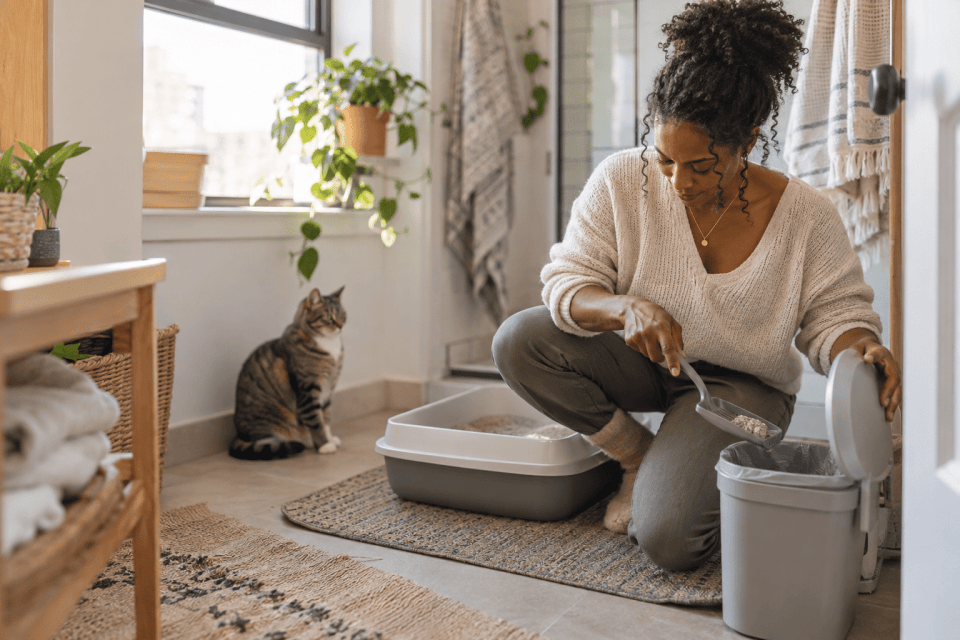
A litter box can fill a room with odor faster than most cat owners expect, usually within a day or two after a missed scoop. The smell doesn’t come from the litter itself, but from waste sitting in contact with air long enough for bacteria to break it down. That’s why odor control depends far more on routine than on any single product. This guide covers what actually creates litter box odor, and the scooping, litter, setup, and disposal habits that stop it.
Why Does a Litter Box Start to Smell?
A litter box starts to smell when waste stays in the box longer than the litter can absorb and hold it. Every litter has an absorption limit, and once urine reaches the bottom of the box or clumps break apart, odor escapes into the room. Scooped waste creates the second problem, because dropping it into an open indoor trash can releases the same smell you just removed from the box.
Containing that waste the moment it leaves the box is what keeps a room from smelling between trash days. Brands like Litter Genie make a cat litter disposal system that locks used litter away with odor-locking technology instead of letting it sit in an open bin. For most homes, that one change removes the odor source that daily scooping alone leaves behind.
What Creates the Ammonia Smell in a Litter Box?
The sharp ammonia smell comes from bacteria breaking down urea in cat urine. As that breakdown continues, ammonia gas releases into the air, and warm or poorly ventilated rooms speed the process up. Removing urine clumps early interrupts the cycle before the gas builds, which is why a daily scoop does more for odor than any additive.
Get the Monday email + free printables for your child’s age
The week's best articles for parents raising Black children, plus free printables and book picks. One email, every Monday. Sign up and we will send you our two routine charts plus a free printable made for your child’s age, from a hospital bag checklist to a teen phone agreement.
Odor Sources Beyond the Litter Itself
The litter bed isn’t the only thing holding smells. Urine can run under the litter and dry on the plastic, scratches in an aging box trap residue that survives a wash, and litter tracked onto a mat carries odor a few feet from the box. Scooped waste left in an indoor can adds a fourth source. Fixing odor means addressing all of them, not just adding fresh litter on top.
How Often Should You Scoop and Change the Litter?
Scooping frequency controls daily odor, and the full litter change controls the background smell that builds over weeks. The two work together, and skipping either one shows up in the air within days.
Daily Scooping as the Baseline for Odor Control
Scoop every box at least once a day, and twice a day if you can. Cats are clean by nature, and a soiled box is one of the most common reasons they start avoiding it, so daily scooping protects both the air and the habit. Keep the litter depth consistent after each scoop, around 2 to 3 inches, so urine gets absorbed before it reaches the bottom.
How Often Should You Do a Full Litter Change?
A full change means emptying the box completely, washing it, drying it, and refilling with fresh litter. The right interval depends on the litter type, and these ranges are estimates rather than fixed rules:
- Non-clumping clay: roughly every 7 to 10 days
- Clumping clay: roughly every 15 to 30 days, and every 30 to 50 days for high-quality sodium bentonite
- Silica: roughly every 10 to 20 days, with more frequent washing of the box itself
- Plant-based: roughly every 7 to 30 days, depending on the material
A commonly published benchmark for clumping litter sits near 4 weeks in a single-cat home and 2 to 3 weeks when several cats share the boxes. Watch the box rather than the calendar, since a smell that returns right after scooping usually means the full change is overdue.
Which Litter Type Controls Odors Best?
Litter choice decides how much urine gets trapped before it reaches the plastic. The best odor performer is also the one most cats accept, which makes the decision simpler than it looks.
Why Unscented Clumping Litter Holds Odors Better
Unscented clumping litter forms a solid mass around urine, so the whole deposit lifts out in one piece, and nothing stays behind to break down. Fine, soft, low-dust granules pack tightly, which limits the open space urine can travel through. A cat’s sense of smell is up to 1,000 times more acute than ours, according to feline veterinary literature, so an unscented formula also avoids the fragrance that pushes many cats away from the box.
What to Know About Silica and Plant-Based Litters
Silica crystals absorb moisture well but don’t lock odor the way clumping litter does, and their larger granules leave more open space, so urine can reach the bottom of the box where smell builds. Data compiled by Educhateur associates silica with elimination outside the box more than any other litter type. Plant-based litters vary widely by material, from corn to wood to paper, so judge them by how tightly they clump rather than by the label. Whatever you use, switch litter types gradually, because a sudden change can make a cat stop using the box.
Litter Box Setup That Prevents Odor Buildup
The number of boxes, their design, and where they sit determine how much odor ever reaches your living space. Setup problems are the most common cause of litter box complaints, with estimates attributing 40 to 75% of house-soiling cases to the box arrangement rather than the cat.
How Many Litter Boxes Does One Home Need?
The standard is one box per cat plus one more, placed in separate, calm, accessible spots. Several boxes spread the waste load, so no single box gets saturated between scoops. Size matters as much as count, since most store-bought boxes are too small, and a cat should be able to squat, turn around, and step out comfortably.
Do Covered Boxes Contain Odors or Just Hide Them?
A hood keeps smell from spreading across the room, but it also concentrates it inside the box, which is the part your cat has to walk into. Most cats dislike covered boxes because the hood makes the space feel cramped and leaves a single entry and exit. An open box with daily scooping controls odor better in practice, since a cat that avoids a covered box will find somewhere else to go.
Placement Rules That Keep Smells Out of Living Areas
Put boxes in quiet, ventilated spots away from food bowls, sleeping areas, and heat sources that accelerate odor. Avoid tight closets and sealed cabinets, where air stagnates and smells build. Spreading boxes across different rooms and floors also gives each cat a route that doesn’t cross another cat’s path.
What Should You Do With Scooped Waste?
Scooped waste is the step most odor routines skip. Dropping clumps into an open indoor can puts the smell back into the room, and tying them in a grocery bag only delays it. The goal is to contain waste the second it leaves the box and keep it contained until trash day.
From Scoop to Outdoor Bin: A Routine That Contains Odors
The routine is simple: scoop, drop the waste into a closed litter pail, lock it in, then empty the full refill bag into your outdoor trash bin. The pail replaces the trips to an open indoor can, not the outdoor bin itself. In homes with several cats, a larger pail is worth the space, because it holds more waste between empties. Keep the pail beside the box so the waste never travels through the house uncovered.
When Should You Replace a Litter Box?
Replace a box based on its condition, not on a schedule. Plastic absorbs odor over years of use, and once a box smells after a thorough wash, no litter or additive will fix it.
Signs the Plastic Has Absorbed Odors
Check for a smell that lingers after the box is empty, washed, and fully dry. Deep scratches on the floor and walls of the box are the usual cause, since they hold residue that soap can’t reach. A cat that suddenly hesitates at a clean box is often reacting to the same odor you can barely detect.
Materials That Stay Odor-Neutral Longer
Smooth, non-porous surfaces hold up far better than scratched plastic. The Litter Genie Platinum litter box, for example, has a durable stainless steel base that does not absorb odors, so the surface stays odor-neutral wash after wash. Whatever material you choose, a box with rounded corners and no rough seams is easier to clean completely.
Cleaning Habits That Keep the Box Fresh Between Changes
Wash the empty box with warm water and a plain, unscented soap, then dry it completely before refilling. Skip bleach and strongly scented cleaners, since the residual smell can deter a cat and mask the odor you need to notice. Because a home already has more than one box, stagger washes across different days so each one dries fully before you put it back into use. Wipe the rim, the scoop, and the mat on the same schedule, since all three carry residue that keeps a clean box smelling used.
Key Takeaways for a Litter Box That Stops Smelling
Stopping litter box odor comes down to four habits working together. Scoop every box daily, use an unscented clumping litter at a consistent depth, give each cat its own open box plus one more in a ventilated spot, and lock scooped waste into a closed pail until trash day. Do a full litter change and wash on a realistic interval for your litter type, and replace any box that still smells once it’s clean and dry. Run all of those together, and the smell stops returning between cleanings instead of building through the week.
Frequently Asked Questions About Litter Box Odors
Why Does My Litter Box Smell Right After I Clean It?
A smell that survives a clean usually comes from the box itself, not the litter. Urine that ran under the litter bed dries on the plastic, and scratches hold residue that soap can’t reach. If the odor persists after you wash and fully dry the box, it’s time to replace it.
Does Baking Soda Stop Litter Box Odors?
Baking soda absorbs a small amount of odor, but it doesn’t stop the bacterial breakdown that produces ammonia. It can help slightly when mixed lightly into the litter, though heavy amounts change the texture and some cats reject it. Treat it as a minor addition, never as a substitute for daily scooping.
Do Scented Litters Help Control Odors?
Scented litters cover smell without reducing it, and the fragrance can overwhelm a cat with a far sharper sense of smell than yours. Many cats start avoiding the box once you introduce a scented formula, which creates a bigger problem than the original odor. Unscented clumping litter with a daily scoop works better on both counts.
How Do You Stop Litter Box Odors in a Small Apartment?
In a small space, containment matters more than anything else. Scoop twice a day, keep the box in the most ventilated spot available rather than a closed closet, and lock the scooped waste into a closed pail right beside the box. Empty the full refill bag into the outdoor bin on a regular schedule to keep the smell from settling into the room.












comments +