

By Martha Kakooza

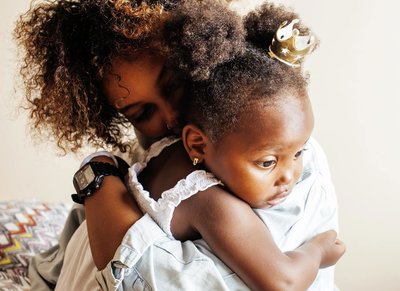
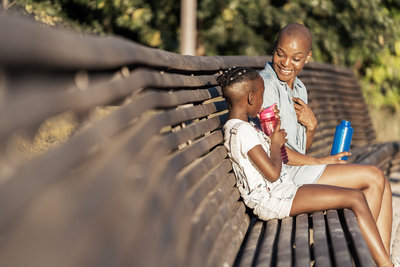
Before many Black students ever enter a college classroom, they have already learned something about belonging at home. They learn it in the ordinary rituals of family life: the auntie who asks about school before asking if you have eaten, the parent who corrects your tone because they know the world will not always hear you fairly, the grandparent whose stories turn sacrifice into inheritance, the prayer spoken before a test, and the warning to “remember who you are” before walking into a room that may not be ready to recognize you. For many Black children, belonging is not first learned through campus welcome signs or institutional statements. It is learned through family.
As a higher education researcher studying Black African immigrant students’ experiences of belonging, my research on Black African immigrant students and belonging in higher education has shown me that Black students do not arrive on campus as blank slates. They arrive carrying family histories, cultural expectations, spiritual grounding, migration stories, racial realities, and dreams that often exceed the individual. Their education is rarely only about them. It may represent a mother’s sacrifice, a father’s hope, a grandmother’s prayer, a family’s migration, or a community’s belief that one child’s achievement can widen the road for others.
This is especially important as the Black population in the United States becomes more internally diverse. Pew Research Center reports that more than 4 million single-race Black people in the U.S. were foreign-born in 2023, representing 11% of that population. Pew also reports that African-born Black immigrants increased from about 600,000 in 2000 to 2.4 million in 2024. These numbers matter because Black family life in the United States includes many histories: descendants of enslaved Africans, Caribbean families, African immigrant families, multiracial Black families, blended families, working-class families, middle-class families, and families building homes across borders.
Get the Monday email + free printables for your child’s age
The week's best articles for parents raising Black children, plus free printables and book picks. One email, every Monday. Sign up and we will send you our two routine charts plus a free printable made for your child’s age, from a hospital bag checklist to a teen phone agreement.
In my work, belonging is not simply a feeling students either have or lack. It is spatial, relational, and cultural. Students learn where they belong through classrooms, advising offices, residence halls, cultural organizations, churches, dining tables, family WhatsApp groups, and the quiet emotional geographies of everyday life. One student may feel powerful in a cultural organization but hesitant in a classroom. Another may feel deeply rooted at home but invisible on campus. Another may feel loved by family while also burdened by the pressure to become proof that every sacrifice was worth it.
I think of the Black African immigrant student who moves between two worlds before noon. At home, she is someone’s daughter, niece, cousin, interpreter, prayer point, and evidence that sacrifice was not in vain. Her family asks about school with pride, but also with expectation. They remind her that education is connected to everyone who crossed borders, sent money, worked long hours, prayed quietly, or dreamed on her behalf.
Then she steps onto campus and enters spaces that do not always know how to read the fullness of who she is. In one room, she is praised as resilient. In another, she is treated as unfamiliar. In a cultural organization or faith community, she may exhale and feel known. In a classroom or advising office, she may measure her questions, her confidence, and her visibility. Her belonging is not absent, but it is uneven. It lives in fragments across home, campus, community, and memory.
That is why Black family life matters to conversations about belonging. Family often gives students the first language of belonging, but institutions decide whether that belonging can travel with them or whether students must leave parts of themselves at the door.
“The question is not whether Black students are resilient enough to succeed. Many already are. The better question is whether our institutions are honest enough to examine the spaces they ask Black students to enter.”
For Black families, education has long carried meanings beyond credentialing. It has been tied to freedom, racial uplift, survival, mobility, protection, resistance, and hope. In immigrant families, education may also carry the weight of border crossings, remittances, visa uncertainty, language learning, underemployment, and the ache of starting again. In many Black households, children are not only told to succeed. They are taught that their success is connected to everyone who helped them get there. That kind of love can build confidence. It can also create silence.
Some students do not tell their families when they are lonely. Some do not say when they are struggling academically because they do not want to worry parents who have already sacrificed so much. Some do not admit when a major, career path, or institutional space no longer fits because they fear disappointing the family that proudly imagined their future before they fully chose it.
Too often, public discourse talks about Black families through deficit. It asks what Black parents did not do, what Black children are missing, or why Black students are not achieving enough. But Black families have always been sites of knowledge production. They teach strategy, discernment, endurance, faith, humor, protection, improvisation, and communal responsibility. They teach children how to read a room before the room reads them.
Still, families should not have to do all the work of belonging alone. Schools and colleges often benefit from the cultural labor of Black families while failing to fully recognize it. A student may arrive disciplined, ambitious, multilingual, spiritually grounded, community-minded, and deeply motivated, yet still be interpreted through narrow measures of readiness or fit. The question is not whether Black students are resilient enough to succeed. Many already are. The better question is whether our institutions are honest enough to examine the spaces they ask Black students to enter.
Critics may say students simply need to adapt, work hard, and take advantage of opportunities. But Black families know adaptation. Immigrant families know adaptation. Working-class families know adaptation. Black children are often taught adaptation before they are taught algebra. The issue is not whether students can adjust. The issue is why adjustment so often moves in only one direction.
The call to action is clear. Families: keep telling the stories. Tell children not only what you survived, but how you made meaning, built community, practiced faith, and found joy. Make room for children to be honest about pressure, not only proud of achievement.
Educators: stop treating family as background information. Ask what students carry with them. Learn the cultural, emotional, and relational contexts that shape how students move through your classrooms and offices. Institutions: examine your spaces. Do not only ask whether Black students are enrolled. Ask where they feel recognized, where they feel watched, where they feel alone, and where they find community. Ask what your classrooms, residence halls, advising offices, policies, and traditions teach them about who is expected to belong. And students: your family’s dreams matter, but your wholeness matters too. You are a full person.
Black students learn belonging long before college. The rest of us should be humble enough to learn from where that belonging begins: around kitchen tables, in living rooms, in church pews, in family stories, in correction, in laughter, in prayer, and in the communities that teach children they are somebody before the world tries to convince them otherwise.










comments +