


By Dr. Africa Roberts Bell, DSW, LMSW-Supervisor

On September 5, 2015, my divorce became final. I remember the date because some dates become markers in your life. There is the life you knew before them and the life you must learn to live afterward.
For me, September 5 was more than the legal ending of a marriage. I was a mother of two daughters, and whatever I was feeling or trying to understand, I knew they were experiencing change too. We had to adjust together.
I wish I could say I had a perfect plan for what came next. I did not. I was trying to understand my new normal while making sure my daughters felt loved, supported, and secure. Life did not stop while I figured things out. Bills, work, school activities, celebrations, disappointments, and the ordinary responsibilities of raising children filled the days. Through all of it, I was still Mama.
Get the Monday email + free printables for your child’s age
The week's best articles for parents raising Black children, plus free printables and book picks. One email, every Monday. Sign up and we will send you our two routine charts plus a free printable made for your child’s age, from a hospital bag checklist to a teen phone agreement.
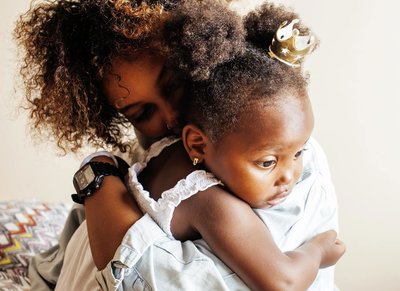
One of my greatest responsibilities after my divorce was being a constant for my daughters. They needed to know that although our family had changed, my presence had not. I wanted them to know, “Mama is here.”
That did not mean I always had the right answer or that I was never tired, worried, or overwhelmed. It meant I kept showing up. Sometimes being the person everyone depends on can feel lonely. You can be surrounded by people and still wonder, “Who is holding me while I am holding everybody else?”
As a Black mother, I understand how easily strength can become an expectation. We are often celebrated for how much we carry. But I have learned that strength is not measured by carrying everything without help. Sometimes strength means allowing someone else to help carry the load.
My experience is part of a larger story of Black motherhood and changing family structures. Federal child well-being data show that in 2022, 45.6% of Black children lived with their mother only. Numbers can describe family structure, but they cannot tell the complete story of what happens inside a family. A statistic cannot measure the late-night conversations, prayers, sacrifices, laughter, school accomplishments, disappointments, or the mother who steps into another room to gather herself before returning to her children.
“Sometimes being the person everyone depends on can feel lonely. You can be surrounded by people and still wonder, “Who is holding me while I am holding everybody else?””
My story is also not one of doing everything alone. I had a support system. There were people who encouraged me, prayed for me, listened to me, loved my daughters, and reminded me that being a single mother did not mean I had to mother without support. My faith also became an important source of strength. I was my daughters’ constant support, but I needed support too. There is no trophy for struggling alone.
Divorce happened between their parents, but the transition belonged to all of us. My daughters had their own feelings, questions, and ways of processing what happened. I had to understand that their adjustment would not necessarily look like mine. The American Psychological Association notes that although divorce can be difficult for children, research suggests most children adjust well within about two years, and parents can ease the transition by keeping conflict away from children.
That resonates with me because children need room to feel. My responsibility was not to create a life in which my daughters never experienced hurt. It was to create an environment where they knew they could come to me when they did. Sometimes that required conversation. Sometimes reassurance. Sometimes simply being present.
People can look at statistics about single-parent families and make assumptions about children and their futures. But family structure alone does not tell you everything about a family. Different does not automatically mean broken. My daughters did not need me to spend their childhood mourning what our family used to look like. They needed me to help us build something healthy with the family we still had.
Nearly eleven years later, I see young women who have developed their own voices, pursued their goals, and continued becoming who they were created to be. They were not the only ones growing. I was growing with them.
To the single mother who feels alone: you do not have to figure out the next ten years today. Be present today. Listen to your children. Allow them to have their feelings, and give yourself permission to have yours. Build a trustworthy support system and allow yourself to use it. Ask for help. Accept help. Celebrate the small victories.
Your children do not need you to perform strength every day. They need your presence, love, guidance, and reassurance that they are not navigating change alone.
September 5, 2015, changed the structure of my family. It did not end my family. My daughters and I adjusted. We grew. We learned. I became a constant source of support for them while learning to receive support myself. We are still becoming. Together.










comments +