

Last Updated on August 1, 2026 by Successful Black Parenting Staff
A Black father explains how watching his young son care for a baby doll challenged what he had been taught about boys, masculinity, nurturing, and play.
My 4-year-old son, Owen, is the coolest little dude you will ever meet. I will admit that I may be somewhat biased because I am his dad, but he really is pretty amazing.
He is smart, and you do not have to take only my word for it. His preschool teacher said he has an “engineer’s brain,” and she should know because her son is an engineer. He is funny, too. I am talking about Chris Rock funny, but without the cussing.
His creativity is apparent nearly every day when he shows my wife and me the masterpieces he colors at school and insists we find yet another spot on his bedroom wall to hang them. He is athletic, blessed with the ability to run like the wind and leap like a frog. He has hand-eye coordination that most adults, including me, do not have. He also has strength that he imposes on me during our karate and wrestling matches.
Owen is brave, assertive, and kind. It also happens that my son plays with baby dolls, an activity that I have not only come to allow but also appreciate.
What This Father Learned
- Toys do not have to be divided into categories for boys and girls.
- Pretend play gives children opportunities to imitate caregiving.
- Playing with dolls does not take away a boy’s strength or identity.
- Parents may need to question messages they inherited about masculinity.
- Boys need room to practice being loving, nurturing, and emotionally present.

Owen’s interests include art, sports, imaginative play, and caring for baby dolls.
I Once Believed Dolls Were Only for Girls
I must say that I was not always accepting of the idea of my son playing with dolls. Until a few months earlier, I discouraged it.
I can recall Owen being no older than 18 months when he grabbed one of his sister’s dolls and dragged it around the house. “Hey, boy! Put that down! Boys don’t play with dolls!” was my impulsive response. I pried the doll out of his little hand and replaced it with a football or an action figure, something that I considered more suitable for a boy.
Over the next few years, similar situations arose in which I discouraged or forbade Owen’s desire to play with dolls.
“No, son. Boys don’t play with dolls, remember? Dolls are for girls.”
Where My Ideas About Masculinity Came From
Several things helped shape my former view of boys playing with dolls. I played the traditionally masculine game of football from little league to the NFL. My religious views, cultural upbringing, and society’s expectations about gender roles also influenced me.
As a Black child raised in inner-city Detroit, I learned early that boys were expected to engage in “masculine” activities. The rougher the behavior, the more acceptable it appeared to be. Anything outside that imaginary boy-box could be labeled “soft,” which was presented as something a boy should never be.
In my neighborhood and at school, boys were expected to play with toys such as G.I. Joe and Ninja Turtles, participate in sports, roughhouse, fight, or show an early interest in girls. Doing nothing could be seen as more acceptable than participating in performing arts, cooking, caregiving, or other activities traditionally described as feminine.
Those messages did not leave much room for boys to be complete human beings. They placed strength and tenderness on opposite sides, even though children need opportunities to develop both.

Pretend caregiving gave Owen a way to imitate the loving fatherhood he observed at home.
The Moment That Changed My Mind
What caused my change of heart? That summer, I had an opportunity to spend a significant amount of time at home with my family. I witnessed and participated in daily imaginative play with my children.
One day, I was sitting in the house watching them play in the backyard when I noticed that my son was pushing a baby stroller with one of his sister’s dolls inside. Instead of rushing over to chastise him, I decided to watch.
I heard Owen tell his sisters that he was a daddy and was taking his baby out to play. Then he spent the next few minutes playing with the doll much like I cared for him and his sisters. He moved between pushing the stroller, shooting hoops, chasing his sisters with sticks, playing in the dirt, and checking on his baby.
As the summer continued, I watched my son feed, wash, and tuck baby dolls into bed. I let it happen. Then it finally hit me. My son was imitating me. He was using his imagination to practice being a daddy.
“It finally hit me. My son was imitating me. He was using his imagination to practice being a daddy.”
The more I observed him, the more I realized that I had been wrong. By taking the doll away, I had been taking away an opportunity for Owen to practice being nurturing, loving, attentive, and caring. Those are qualities he may need in one of the most important roles he could ever have.
What Child-Development Guidance Says About Play
Play is not merely entertainment. The American Academy of Pediatrics’ guidance on the power of play explains that play supports children’s social, emotional, language, thinking, and self-regulation skills.
Dolls, toy kitchens, blocks, sports equipment, costumes, art supplies, and vehicles all invite different types of learning. Restricting a toy solely because it has been marketed to another gender may unnecessarily limit how a child explores creativity, caregiving, movement, storytelling, or problem-solving.
UNICEF’s guidance on removing gender stereotypes from playtime encourages families to offer children diverse and inclusive toys rather than dividing play into rigid categories for girls and boys.
Then My Son Took His Doll Into Public
One weekend, my family and I were spending time in Greektown, a busy and popular area in Detroit. My son, who was in full daddy mode, decided to take his daughter, also known as his baby doll, into a local restaurant. He left Spider-Man in the car.
As we walked through the restaurant, I noticed several people staring, mostly men. They looked at my son dragging the baby doll beside him, and then their eyes shifted toward me. No words were needed. I had a good idea of what they were thinking because I once gave the same confused stares.
They may have wondered, “What are you thinking?” or “Are you really going to allow your son to play with a doll?”
Yes, I was. I was thinking about how important it is for boys to experience present, loving, and emotionally available fatherhood. I was thinking about how boys learn to care for others when we model caregiving and give them opportunities to practice it.
If my son playing with a doll enables him to practice fatherhood and envision himself as a present, loving, nurturing dad, then I am okay with it.
Why This Conversation Matters for Black Boys
Black boys often receive powerful messages telling them to be hard, hide vulnerability, and treat tenderness as weakness. Those expectations can follow boys into adolescence and adulthood, making it harder to name emotions, ask for help, or show affection freely.
Successful Black Parenting Magazine explores this issue further in It’s Okay to Raise Black Boys-To-Men With Emotions. Raising an emotionally healthy Black boy does not mean leaving him unprepared for the world. It means giving him more tools for navigating it.
Strength can include protecting others, apologizing, comforting a child, asking for help, preparing a meal, setting boundaries, and remaining present during difficult emotions. None of those qualities makes a boy less masculine. They help him become a more capable human being.
How Parents Can Support Open-Ended Play
- Offer children a variety of toys instead of dividing them by gender.
- Watch how your child uses a toy before correcting or redirecting the play.
- Ask your child what story they are creating.
- Avoid teasing or shaming a child for choosing a particular toy.
- Model nurturing behavior and emotional honesty at home.
- Intervene when relatives or other children ridicule harmless play.
- Choose toys that reflect diverse families, professions, cultures, and abilities.
What Playing With Dolls Does Not Tell You
A young child’s interest in a doll does not, by itself, determine the child’s future personality, masculinity, gender identity, or sexual orientation. It tells you that the child is interested in that form of play at that moment.
Children frequently move between many types of play. Owen could care for a baby doll, play basketball, wrestle, create art, run outdoors, and become a superhero within the same afternoon. One interest did not cancel out another.
Parents do not need to attach adult meanings to every toy choice. We can observe, listen, and give children room to learn through play.

This article was reviewed and approved by Janice Robinson-Celeste, Publisher of Successful Black Parenting Magazine.


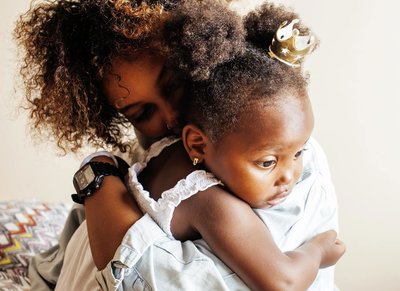










[…] feared raising him to be too emotional in a society where men have historically been thought of as tough and macho. In the end, it is more important to raise a well-rounded human being by removing gender types from […]